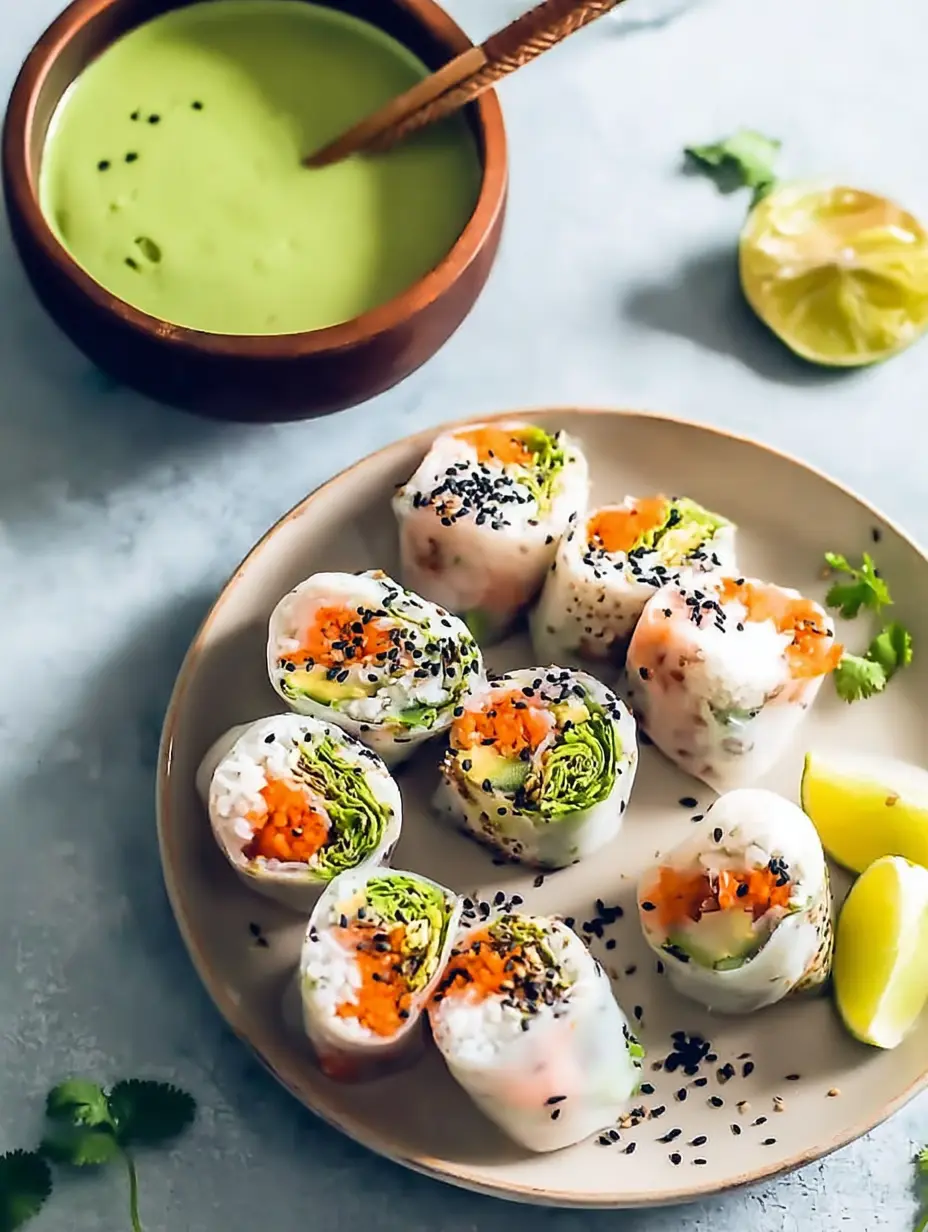
Welcome to a vibrant culinary adventure that reimagines your favorite sushi flavors in a fresh, no-cook spring roll format. Our Fresh Sushi Spring Rolls recipe is the perfect fusion of Japanese tradition and Vietnamese-inspired technique, creating a light, nutritious, and utterly delicious meal. These rolls are not only bursting with color and flavor but are also 100% plant-based, gluten-free, and incredibly satisfying. They’re the ultimate answer for anyone seeking a healthy, portable lunch, a stunning appetizer, or a guilt-free snack.
Packed with crisp vegetables, creamy avocado, sweet mango, and seasoned sushi rice, all wrapped in a delicate rice paper and served with a rich avocado dipping sauce, this recipe is a celebration of clean, wholesome ingredients. The best part? You don’t need any fancy equipment or advanced sushi-rolling skills. With our step-by-step guide, you’ll be creating restaurant-quality sushi spring rolls in your own kitchen in just 30 minutes.
Why You’ll Love This Recipe
This recipe is a game-changer for healthy eating. First, it’s incredibly versatile. You can customize the fillings based on what’s in season or what you have on hand. The base of seasoned sushi rice provides a familiar, comforting texture, while the fresh vegetables and fruits add a delightful crunch and sweetness. The avocado dipping sauce is a revelation—creamy, tangy, and rich without any dairy. It perfectly complements the fresh flavors of the roll.
Secondly, it’s a fantastic make-ahead option. You can prepare the components ahead of time and assemble the rolls just before serving, making them ideal for meal prep, parties, or a quick family dinner. Finally, they are visually stunning. The colorful fillings visible through the translucent rice paper make these rolls a feast for the eyes as much as the palate, guaranteed to impress any guest.
Key Ingredients and Their Benefits
Every ingredient in this recipe has been chosen for its flavor, texture, and nutritional profile. Let’s break down the stars of the show.
Sushi Rice: The short-grain rice becomes sticky when cooked, which is essential for holding the roll together. It’s a good source of energy-providing carbohydrates.
Fresh Vegetables (Cabbage, Carrot, Cucumber): This trio provides a fantastic crunch, vibrant color, and a wealth of vitamins, minerals, and fiber. Cabbage is rich in vitamin C and K, carrots are loaded with beta-carotene, and cucumber adds hydration.
Avocado: Used both inside the roll and in the sauce, avocado contributes heart-healthy monounsaturated fats, which help keep you full and satisfied. It also gives the sauce its luxurious, creamy texture.
Mango: The sweet, tropical burst of mango balances the savory and umami notes from the other ingredients beautifully, while providing vitamin C and antioxidants.
Nori (Seaweed): This is our ‘sushi’ element. Nori adds a subtle, authentic taste of the sea and is packed with iodine, which is crucial for thyroid health.
Rice Paper: These translucent sheets are made from rice flour and water. They are gluten-free, low in calories, and become pliable when soaked, creating the perfect edible wrapper.
Step-by-Step Instructions for Perfect Rolls
Mastering the art of the spring roll is easier than you think. Follow these detailed steps for flawless results every time.
Preparing the Sushi Rice
The foundation of a great sushi spring roll is perfectly seasoned rice. Cook the sushi rice according to the package instructions. Typically, you’ll bring it to a boil, then simmer on low for about 10 minutes. Once cooked, remove it from the heat and let it rest, covered, for 15 minutes. This allows the rice to steam and become perfectly tender. While the rice rests, prepare the dressing. In a small saucepan, gently heat the rice vinegar, salt, and sugar until they dissolve.
This creates the classic sweet-and-sour sushi rice flavor. Gently fold this dressing into the warm rice using a rice paddle or a spatula, being careful not to smash the grains. Spread the rice out on a tray or a large plate to let it cool completely to room temperature. Using warm rice on the rice paper will make it soggy and difficult to handle.
Making the Avocado Dipping Sauce
This sauce is so good, you’ll want to put it on everything! Cut a ripe avocado in half, remove the pit, and scoop the flesh into a food processor or blender. Add the coconut yogurt, soy milk, finely chopped garlic, and the fresh juice of half a lemon. Season with a pinch of salt and a dash of black pepper. Blend until the mixture is completely smooth and creamy.
Taste and adjust the seasoning if needed. If the sauce is too thick, you can add a teaspoon more soy milk. Transfer the sauce to a small serving bowl. For best flavor, cover and let it sit in the refrigerator while you prepare the rest of the ingredients; this allows the flavors to meld.
Prepping the Fillings
Precision is key here for easy rolling. Using a sharp knife or a mandoline, cut the cabbage, carrot, cucumber, and the remaining half of the avocado into thin, uniform matchsticks (julienne). Slice the mango into similar-sized strips. Having all your fillings cut to a similar size and shape ensures an even distribution in every bite and makes rolling much simpler.
Using kitchen scissors, cut the nori sheet into long strips, roughly 4 inches in length. Prepare a small dish with the black sesame seeds. Organize all your fillings in separate bowls or on a large platter for an efficient assembly line.
Assembling and Rolling Like a Pro
Fill a large, shallow dish or a pie plate with warm (not hot) water. Work with one rice paper sheet at a time. Submerge it completely in the water for about 10-15 seconds. You’ll feel it start to soften. Don’t over-soak it, or it will become too fragile and tear. Carefully remove it and lay it flat on a clean, damp kitchen towel. The towel will absorb excess water and prevent slipping. On the bottom third of the rice paper (closest to you), place a small scoop of the cooled sushi rice. Use your fingers to gently spread it into a thin, even layer, leaving about an inch of space on the left and right sides. Now, layer your vegetables: a few strips of cabbage, carrot, avocado, cucumber, and mango.
Place one or two strips of nori on top and finish with a sprinkle of black sesame seeds. Now, for the roll: Lift the bottom edge of the rice paper up and over the filling, tucking it in snugly. Next, fold the left side inward, then the right side, like you’re folding a burrito. Finally, holding the filling securely, continue rolling away from you until the spring roll is sealed. The rice paper will stick to itself. Place the finished roll on a serving plate and cover with a slightly damp cloth to prevent drying out while you assemble the remaining rolls. Just before serving, use a sharp knife to cut each roll in half on a diagonal.
Expert Tips and Serving Suggestions
For the most successful rolling experience, keep your fillings modest. Overstuffing is the most common mistake, which leads to torn wrappers. A thin, even layer of rice and a small handful of veggies is perfect. If your rice paper tears slightly, don’t panic. You can often patch it with a small piece of another soaked rice paper, or simply roll another one around it—no one will notice once it’s cut and sauced! To serve, arrange the halved spring rolls on a beautiful platter with the bowl of avocado dipping sauce in the center.
Garnish with extra sesame seeds and a wedge of lemon. These rolls are a complete meal on their own, but they also pair wonderfully with a light miso soup or a simple Asian-inspired salad with a ginger-sesame dressing. They are perfect for picnics, packed lunches (pack the sauce separately), or as part of a larger buffet.
Nutritional Information
This recipe is a powerhouse of nutrition. Each serving provides a balanced mix of complex carbohydrates, healthy fats, plant-based protein, and dietary fiber. The following table details the nutritional content per serving, helping you understand the health benefits of this delicious dish.
| Nutrient | Amount Per Serving |
|---|---|
| Calories | 289 calories |
| Total Fat | 4 grams fat |
| Carbohydrates | 57 grams carbohydrates |
| Protein | 6 grams protein |
| Dietary Fiber | 3 grams fiber |
| Sugars | 6 grams sugar |
| Sodium | 201 grams sodium |
As you can see, these sushi spring rolls are relatively low in fat and calories while being satisfyingly high in volume and nutrients. The fiber from the vegetables and rice aids digestion and promotes a feeling of fullness.
The healthy fats from the avocado support nutrient absorption and brain health. This makes the recipe an excellent choice for anyone following a weight-conscious, vegan, or simply clean-eating lifestyle.
Storage and Meal Prep
Spring rolls are best enjoyed immediately after assembly for the ultimate fresh texture. However, you can successfully prep components ahead of time. The cooked and seasoned sushi rice can be stored in an airtight container in the refrigerator for up to 2 days. The avocado dipping sauce can be made a day in advance; press a piece of plastic wrap directly onto the surface to prevent browning and store in the fridge. All vegetables can be washed, cut, and stored in separate containers for 2-3 days.
Assemble the rolls no more than a few hours before serving. If you need to store assembled rolls, place them in a single layer in an airtight container, separated by parchment paper, and refrigerate for up to 4-6 hours. Note that the rice paper wrapper may harden slightly in the fridge. Enjoy your journey into healthy, homemade sushi!
The Recipe
Print
Fresh Sushi Spring Rolls
- Total Time: 30 min
- Yield: 8 servings 1x
- Diet: Vegan, Vegetarian, Gluten-Free
Description
Vibrant, no-cook vegan spring rolls filled with seasoned sushi rice, fresh veggies, mango, and nori, served with a creamy avocado dip.
Ingredients
1/2 avocado (for sauce)
2 tbsp coconut yogurt
2 tbsp soy milk
1 clove garlic
1/2 lemon, juice
pinch of salt
dash of black pepper
1 cup cabbage
1 carrot
1 cucumber
1/2 mango
1/2 avocado (for filling)
1 sheet nori algae
2 tsp black sesame seeds
125 grams sushi rice
2 tbs rice vinegar
1/2 tsp salt
1/2 tsp sugar
8 rice papers
Instructions
- Prepare sushi rice: cook rice according to package instructions. Bring to a boil and then simmer on low for 10 minutes. Remove from heat and let rest for 15 minutes with lid on.
- Prepare the rice dressing: mix 2 tbsp rice vinegar with 1/2 tsp salt and 1/2 tsp sugar. Heat on the stove for the ingredients to dissolve and mix into the cooked rice. Let cool down.
- Prepare the avocado dipping sauce: Cut avocado in half, remove pit and scoop out the avocado flesh. Place into a food processor, add coconut yogurt, soy milk, finely chopped garlic, juice of half a lemon and season with salt and pepper to taste. Blend until smooth.
- Prepare the spring rolls fillings: cut vegetables and mango into thin strips. Cut the nori algae sheet with scissors into strips, about 4 inches long.
- Assemble your sushi spring rolls: Dip rice paper sheet by sheet into a dish with warm water for about 15 seconds, until you feel the paper to become soft. Remove from the water and place on a clean kitchen towel. Start adding your fillings by placing a scoop of cooked rice and spreading it onto the bottom half of the rice paper. Make sure to leave about an inch of room to each side. Add vegetables – cabbage, carrot, avocado, cucumber and mango. Then add a strip or two of nori algae and sprinkle with black sesame seeds.
- Roll your sushi spring roll: take the bottom (the one closest to you) and stretch it up over the filling. Do the same with the left and right side of the paper – pick up and stretch over the filling sideways. Be careful not to crumple the rice paper. Then, roll it away from you until your spring roll is formed and the rice paper sticks together, keeping the shape. With a sharp knife, cut the roll in half and set aside on a plate.
- Serve immediately with the dipping sauce.
Notes
- For best results, ensure the sushi rice is completely cool before assembling.
- Do not over-soak the rice paper; 10-15 seconds in warm water is usually enough.
- If the rice paper tears, you can patch it with a small piece of another soaked sheet.
- Assembled rolls are best eaten fresh but can be stored in the fridge for a few hours covered with a damp cloth.
- Prep Time: 15 min
- Cook Time: 15 min
- Category: Appetizer, Main Course
- Method: No-Cook, Assembled
- Cuisine: Fusion (Japanese-Vietnamese)
Nutrition
- Serving Size: 1 spring roll
- Calories: 289 calories
- Sugar: 6 grams sugar
- Sodium: 201 grams sodium
- Fat: 4 grams fat
- Saturated Fat: 1 gram saturated fat (estimated)
- Trans Fat: 0 grams
- Carbohydrates: 57 grams carbohydrates
- Fiber: 3 grams fiber
- Protein: 6 grams protein
- Cholesterol: 0 mg