Welcome to an easy, wholesome meal that blends fresh garden produce with simple seasonings. This One Pot Garden Spring Soup delivers bright flavors, hearty texture, and a touch of summer in every spoonful. Whether you’re cooking for a family dinner or looking for a comforting weeknight dish, this soup shines.
Why You’ll Love This Spring Soup
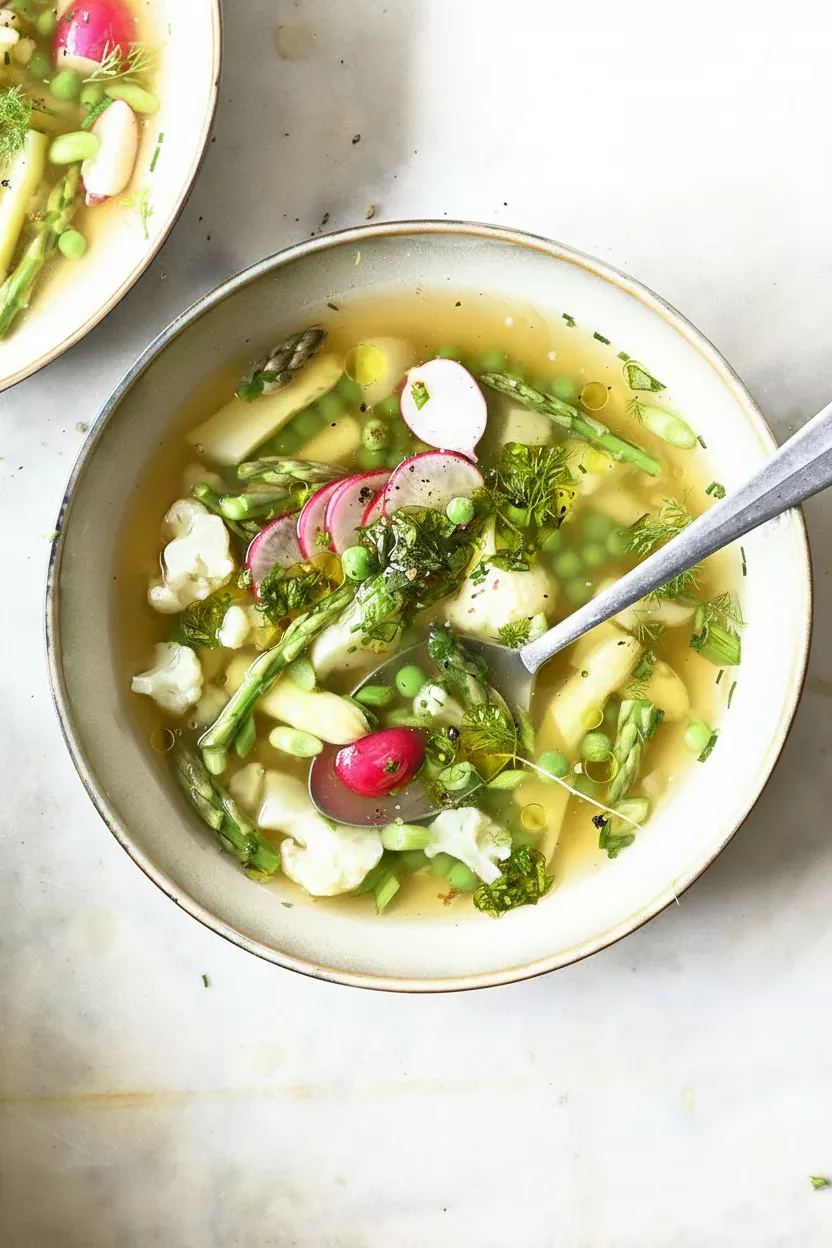
This recipe packs natural sweetness from carrots and peas, while asparagus brings a mild peppery note. The miso and soy give depth without overpowering. You’ll enjoy a nutritious, low-calorie dish that still feels substantial. The aroma of fresh herbs encourages you to eat mindfully.
Recipe
Print
One Pot Garden Spring Soup
- Total Time: 45 min
- Yield: 4 servings 1x
Description
A vibrant, one-pot vegetable soup brimming with fresh spring greens and a creamy miso-soy base.
Ingredients
- 3 tbsp olive oil (45 ml)
- 4 garlic cloves (48 g)
- 1 onion (200 g)
- peels from white asparagus (15 g)
- 1 carrot (75 g)
- 1 celery stalk (50 g)
- 1 leek (30 g)
- 4 scallions (120 g)
- 4 parsley sprigs (10 g)
- 1 tbsp white miso paste (15 g)
- 2 tbsp soy sauce (30 ml)
- salt (to taste) (5 g)
- black pepper (to taste) (1 g)
- 3.5 ounces green asparagus (99 g)
- 5 ounces white asparagus (142 g)
- ½ cauliflower (400 g)
- 3.5 ounces green peas (99 g)
- 2 tbsp chopped basil leaves (15 g)
- 1 tbsp chopped parsley (10 g)
- ¼ garlic clove (minced) (3 g)
- 5 tbsp olive oil (75 ml)
- ¼ tsp salt (1 g)
- 8 radishes (200 g)
- fresh dill (chopped) (10 g)
- chopped scallions (white parts) (30 g)
Instructions
- Peel the white asparagus, cut off the ends, and set the peels aside.
- Roughly chop garlic, onion, and carrot.
- Slice celery, white part of the leek, and white parts of the scallions.
- Gather fresh parsley sprigs and basil leaves.
- Heat olive oil in a large saucepan.
- Add garlic, onion, leek, and scallion whites; cook for five minutes until aromatics soften.
- Stir in asparagus peels and cook three minutes more, letting vegetables release their scent.
- Pour four cups of water into the saucepan, then add sliced celery, cubed carrot, and parsley sprigs.
- Season with a quarter teaspoon of salt and a pinch of black pepper; bring to a boil, reduce heat, and simmer covered for twenty minutes.
- Meanwhile, combine basil, parsley, minced garlic, a splash of water, a teaspoon of olive oil, and seasonings in a small bowl; set aside.
- Divide green and white asparagus into bite‑size pieces; cut cauliflower into small florets.
- Strain the broth, then return to a clean pot and add all fresh veggies.
- Bring the mixture to a boil again.
- Stir in miso paste and soy sauce; simmer for five minutes.
- Taste and season with salt or pepper as needed.
- Serve hot with radish slices, pistou, fresh dill, and chopped scallion greens.
Notes
- Use tamari instead of soy sauce for gluten-free.
- Add lemon juice instead of miso for lighter flavor.
- Keep soup warm with a small pot; avoid boiling after reheating.
- Prep Time: 15 min
- Cook Time: 30 min
- Category: Main Course
- Method: Baked
- Cuisine: American
Nutrition
- Calories: 347 kcal
- Sugar: 7 g
- Sodium: 853 mg
- Fat: 29 g
- Carbohydrates: 20 g
- Fiber: 6 g
- Protein: 6 g
Ingredients and Substitutions
All seasonings come from fresh or pantry sources, so you rarely need to visit a specialty store. If you prefer a gluten-free option, use tamari instead of regular soy sauce. A lemon squeeze brightens the broth, and extra Parmesan can replace miso for a milder taste.
Step 1: Prepare the Veggies
Peel the white asparagus, cut off the ends, and set the peels aside for later. Roughly chop the garlic, onion, and carrot. Slice the celery, white part of the leek, and white parts of the scallions. Gather fresh parsley sprigs and basil leaves.
Step 2: Sauté Base Flavors
Heat the olive oil in a large saucepan. Add garlic, onion, leek, and scallion whites; cook for five minutes until the aromatics soften. Stir in the asparagus peels and cook three minutes more, letting vegetables release their scent.
Step 3: Add Liquid and Basics
Pour four cups of water into the saucepan. Add sliced celery, cubed carrot, and parsley sprigs. Sprinkle in a quarter teaspoon of salt and a pinch of black pepper. Bring the mixture to a boiling point, then reduce heat and simmer covered for twenty minutes.
Step 4: Whip Up Pistou
Combine chopped basil, parsley, minced garlic, a splash of water, a teaspoon of olive oil, and seasonings in a small bowl. Let the mixture sit while the broth simmers; it develops a fresh, herbaceous scent.
Step 5: Add Asparagus and Peas
Divide the green and white asparagus into bite‑size pieces. Break a cauliflower head into small florets. Strain the broth once it has cooled somewhat, then return it to a clean pot. Add all fresh veggies, and bring the soup to a boil again.
Step 6: Finish With Flavor
Stir in the miso paste and soy sauce. Simmer for five minutes, tasting as you go. If needed, add a touch of salt or pepper. The soup should be smooth but still full of veggie texture.
Serving Suggestions
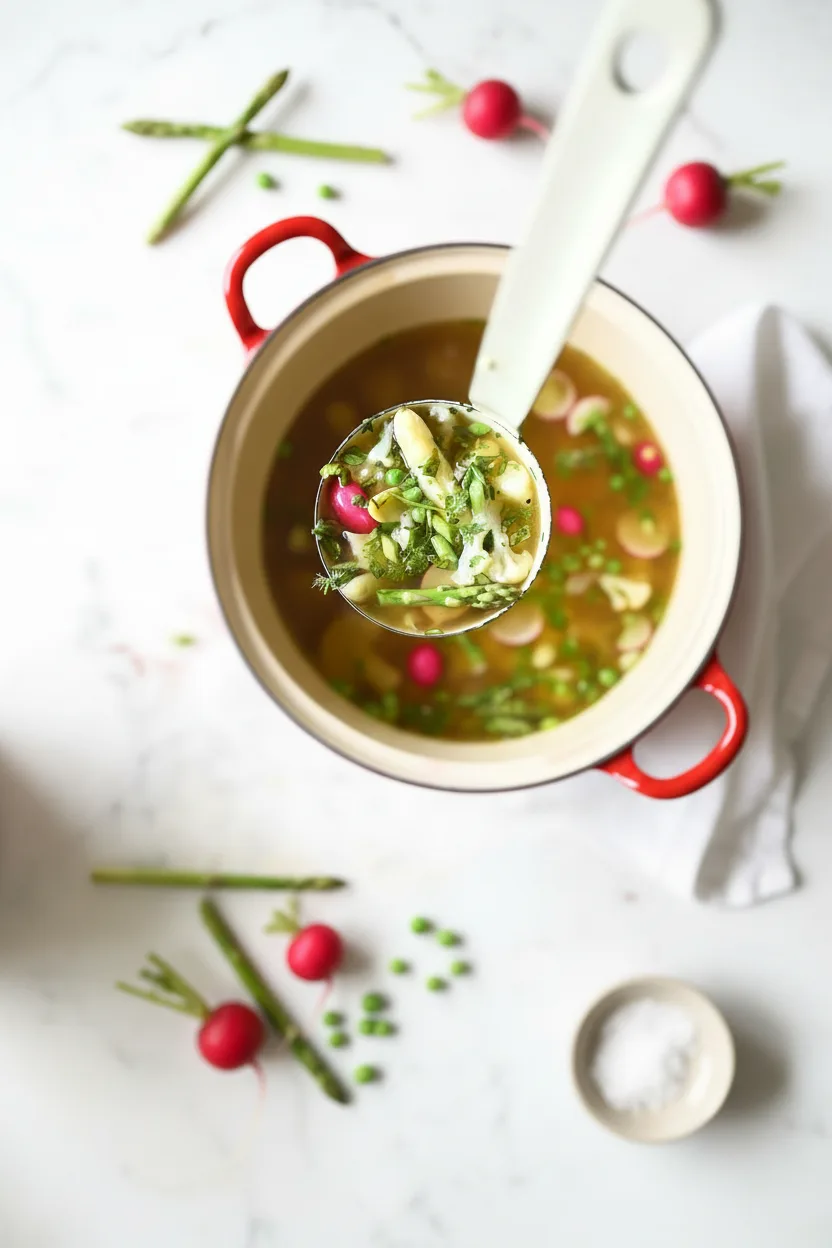
Serve the soup hot with thin radish slices, a sprinkle of fresh dill, and extra chopped scallion greens. A side of crusty bread or a light salad completes the meal. This bowl feels like spring in a pot. Seasonal goodness that garden cuisine brings to your table.
Pro Tips for Success
- Use fresh herbs whenever possible; they bring brightness.
- Stir gently to avoid breaking the vegetables into mush.
- Keep the heat moderate so the broth does not reduce too fast.
- If you like a thicker soup, mash one or two peas with a spoon after simmering.
Flavor Variations
Swap the miso with tomato paste for a sweeter bite. Add a pinch of cumin for earthiness. A splash of lemon juice or a zest of orange offers a citrus pop. Sweet potatoes make this soup even heartier.
Storage and Freezing Instructions
Cool the soup completely before refrigerating. Store in airtight containers for up to three days. For longer storage, use freezer bags or freezer-safe jars. Thaw overnight in the fridge or heat gently on the stove. Re‑warm until steaming, never boil after freezing.
Nutrition Facts per Serving
| Calories | Fat | Carbs | Protein | Fiber | Sugar | Sodium |
|---|---|---|---|---|---|---|
| 347 kcal | 29 g | 20 g | 6 g | 6 g | 7 g | 853 mg |
FAQs About One Pot Garden Spring Soup
- Is this soup suitable for kids? Yes, the mild flavors are gentle on little palates.
- Can I use frozen veggies? Fresh is best, but properly thawed frozen vegetables work in a pinch.
- Does it contain gluten? The base requires no gluten-containing items; soy sauce may contain gluten, but tamari can replace it.
- How do I keep the soup bright? Heat the broth gently, add herbs at the end, and avoid overcooking the greens.
Final Thoughts
This pantry-friendly spring soup tastes like the best of summer garden harvest. It balances nutrition, flavor, and comfort all in one pot. Try it tonight, share it with friends, and enjoy the fresh, seasonal goodness that garden cuisine brings to your table.
The Final Sip
A bowl of spring soup brightens any day. Use it as a starter or a light lunch, and pair it with greens for a fuller meal. Enjoy the garden’s gifts your kitchen deserves the season’s best.
History of Spring Soup
When the first farms log their harvest, cooks learned that light, simple soups could honor the fresh produce of early gardens. In rural America, a humble blend of seasonal greens, root vegetables, and a gentle broth became a staple for families who needed a quick, filling meal. Classic variations have been shared across generations; today the recipe keeps that spirit and invites modern flavors.
The recipe’s roots trace back to the Southern Bluegrass villages, where farmers gathered after harvest to share sustainable meals. Over decades, cooks adapted it with new herbs and local flavors, keeping the soul of the kitchen alive. Chunky Spring Vegetable Soup with Peas showcases a heartier take on this staple.
Nutrition Benefits of Veggies
Asparagus brings folate, biotin, and iron; green peas add plant protein and fibre; radishes offer vitamin C; and carrots give beta-carotene. Together, they provide a balanced mix of micronutrients. The broth remains low in calories yet rich in plant-based antioxidants. Eating this soup supports digestion, boosts immunity, and offers a low-fat, low-sodium option for those seeking a healthy, heart-friendly meal.
Seasonal veggies also bring antioxidants like lutein and zeaxanthin, supporting eye health and reducing inflammation. Consuming these in a warm soup further enhances digestion and helps the body absorb nutrients more efficiently.
How to Prepare Fresh Herbs
Rinse herbs under cold water, pat dry, and trim ribbons of stems. Pinch basil leaves gently before crushing them with a spoon; this releases essential oils. For parsley, coarsely chop the leaf clusters, leaving stems intact for a subtle crunch.
Basil, parsley, and dill bring bright aromatics that complement the earthiness of the broth. Store any leftovers in an airtight container in the fridge for up to two days. Moreover, the aroma of fresh dill adds a slight dill-pepper kick that lightens the broth, making it even more appetizing. Chefs often use a chiffonade of herbs to entice diners.
Detailed Kitchen Tools
A sturdy saucepan with a lid is essential. A wooden spoon keeps the soup from sticking, while a heat-resistant spatula works well for stirring without damaging the pot. A small bowl for mixing the herb sauce should have a lid to keep aromas sealed. A ladle helps serve portions smoothly, and an airtight container is required for leftovers.
A sharp chef’s knife lets you cut vegetables quickly, and a mandoline can shave carrots into thin slices if you prefer a finer texture. An old-fashioned copper saucepan and an enamel pot both work well because they distribute heat evenly, preventing uneven browning and ensuring each vegetable cooks uniformly.
Pairing Ideas with Bread Types
Crusty baguette slices toast lightly to add crunch and absorb liquid. A slice of multigrain bread leavens the soup’s health profile with fiber. For a richer feel, try rye or sourdough, which complement the umami of soy and the sweetness of the vegetables.
If you prefer a dairy twist, offer a soft goat cheese spread or a dollop of Greek yogurt. Pairing bread with herbs or a drizzle of olive oil brings depth to every bite. For an extra hint of luxury, drizzle a teaspoon of truffle oil on top before serving. This subtle touch elevates the dish, making it feel gourmet in a home kitchen.
Seasonal Ingredient Variations
If you’re cooking in late winter, swap fresh asparagus for sautéed spinach or Swiss chard. In late summer, add sliced zucchini or bell pepper for extra crunch. Measurement adjustments are minimal; keep the broth ratio constant to maintain balance.
Common Mistakes & Corrections
Over-cooking the green asparagus makes it wilted and bland. Postpone adding the green peas until the final five minutes to keep their bright color and bite. Skipping the herb garnish lessens aroma; add them just before serving.
How to Warm Quickly
Place the soup in a microwave-safe bowl, cover loosely with plastic wrap, and heat two minutes on high. Stir, then add a splash of water if it looks too thick. This method keeps textures intact.
Thank you for choosing to cook with us taste the difference today.